The electric eel, a creature that seems ripped from the pages of science fiction, possesses one of nature’s most astonishing abilities: the power to generate electricity. Found in the murky waters of the Amazon and Orinoco basins, these serpentine fish have fascinated scientists and laypeople alike for centuries. Their ability to produce shocks strong enough to stun prey or deter predators has earned them a reputation as living batteries. But how exactly does this biological power plant work? The answer lies in a sophisticated system of specialized cells, precise neural control, and evolutionary adaptations that turn the electric eel into a true marvel of natural engineering.
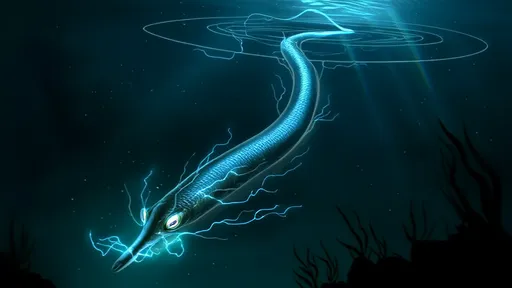
At the heart of the electric eel’s shocking capability are its electrocytes—specialized cells that function like tiny biological batteries. These cells, which number in the thousands, are stacked in series along the length of the eel’s body, much like the cells in a man-made battery pack. Each electrocyte generates a small voltage, but when combined, their collective output can reach up to 600 volts, enough to incapacitate a human or even a horse. The mechanism is remarkably efficient: when the eel decides to discharge, a signal from its brain triggers the simultaneous activation of all electrocytes, creating a synchronized surge of electricity. This precision timing is what allows the eel to deliver a powerful shock without wasting energy.
The evolution of this system is a testament to nature’s ingenuity. Unlike other fish that rely on speed or camouflage, the electric eel has developed a unique offensive and defensive tool. Its entire body is essentially a weapon, with nearly 80% of its length dedicated to generating electricity. The remaining portion houses vital organs, crammed into a small space to make room for the electrocytes. This anatomical sacrifice underscores the importance of electricity to the eel’s survival. Over millions of years, natural selection has fine-tuned this system, optimizing the size, arrangement, and conductivity of the electrocytes to maximize efficiency.
What’s even more fascinating is how the eel avoids harming itself with its own shocks. The secret lies in the way the current flows. When the eel discharges, the electric pulse travels outward in a directed path, minimizing the current that passes through its own body. Additionally, its vital organs are insulated by layers of fat and connective tissue, which act as barriers against self-electrocution. This self-preservation mechanism is so effective that the eel can repeatedly generate shocks without suffering any ill effects—a feature that engineers studying bioelectricity find deeply inspiring.
Beyond hunting and defense, the electric eel’s abilities extend to navigation and communication. In the dark, sediment-filled waters of its habitat, visibility is nearly zero. To compensate, the eel emits low-voltage pulses that create an electric field around its body. When prey or obstacles disturb this field, the eel detects the changes and reacts accordingly. This electrolocation system is so precise that the eel can distinguish between different types of objects and even gauge their distance. Similarly, electric pulses are used to communicate with other eels, conveying information about territory, mating readiness, or aggression.
Scientists studying the electric eel have uncovered potential applications for human technology. The efficiency of its electrocytes has inspired research into bio-batteries—energy storage devices that mimic biological systems. These could one day lead to more sustainable and compact power sources for medical implants or wearable electronics. Additionally, the eel’s ability to modulate its shocks offers insights into neural control systems, which could improve technologies like prosthetics or robotics. The electric eel, once a subject of mere curiosity, is now a muse for cutting-edge innovation.
Yet, despite our growing understanding, many mysteries remain. How exactly do the eel’s neurons coordinate the firing of thousands of electrocytes with such precision? What genetic adaptations allowed this unique trait to evolve? And could other species, perhaps even humans, one day harness similar abilities? These questions drive ongoing research, as biologists, physicists, and engineers collaborate to decode the secrets of this living power station.
The electric eel stands as a reminder of nature’s boundless creativity. In a world where energy is a constant challenge, this unassuming fish offers a masterclass in biological electricity generation—one that humanity is only beginning to appreciate. As we continue to explore its secrets, the electric eel may well spark innovations that reshape our technological future.
By /Jun 10, 2025
By /Jun 10, 2025
By /Jun 10, 2025
By /Jun 10, 2025
By /Jun 10, 2025
By /Jun 10, 2025
By /Jun 10, 2025

By /Jun 10, 2025
By /Jun 10, 2025
By /Jun 10, 2025
By /Jun 10, 2025
By /Jun 10, 2025
By /Jun 10, 2025
By /Jun 10, 2025
By /Jun 10, 2025