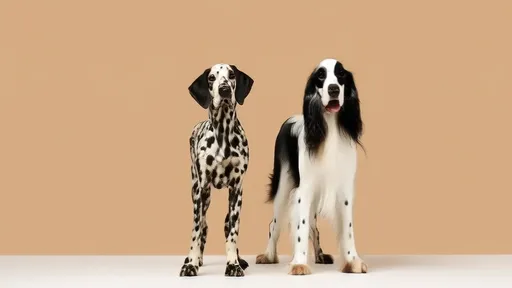
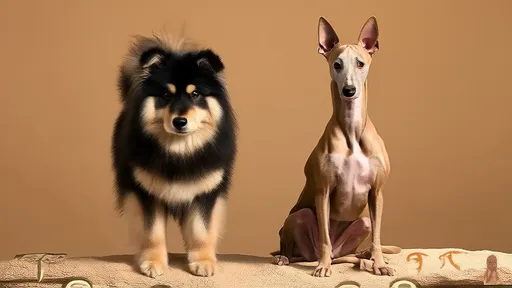
Ancient Dog Breed Resurrection Program: The Genetic Conservation Value of Tibetan Spaniel and Mexican Hairless Dog

Jun 12, 2025 By

The ancient dog breeds, once revered companions of emperors and shamans, now stand at the crossroads of extinction and revival. Among them, the Tibetan Spaniel and the Xoloitzcuintli (Mexican Hairless Dog) carry genetic legacies so unique that their preservation could rewrite our understanding of canine evolution. These living relics, nearly lost to time, are experiencing an unlikely renaissance through cutting-edge genetic preservation initiatives.

In the high-altitude monasteries of Tibet, where prayer flags flutter against cobalt skies, the Tibetan Spaniel was nearly as sacred as the monks who bred them. Weighing barely 10 pounds, these compact dogs with lion-like manes served as "little monks" – warming laps during meditation and alerting to intruders with surprisingly resonant barks. Their genetic isolation over two millennia created extraordinary adaptations: a blood oxygen efficiency rivaling Tibetan mastiffs at 1/10th the size, and a unique thyroid hormone profile that allows survival in -30°C winters. Modern genetic sequencing reveals a haplotype cluster completely distinct from other Asian toy breeds, containing novel genes related to hypoxia tolerance that could inform human altitude sickness research.

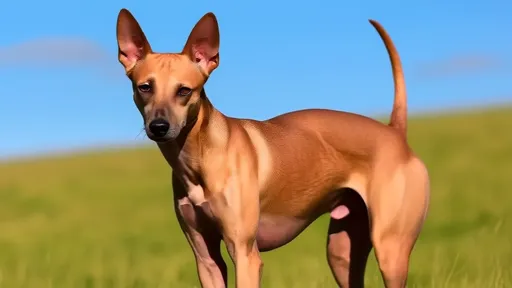
The Xoloitzcuintli's story unfolds in the volcanic highlands of Mesoamerica, where Aztec priests believed these hairless canines guided souls through Mictlán, the underworld. Their 3,000-year pedigree makes them one of the most genetically "primitive" breeds, retaining traits from the earliest New World dog migrations. Unlike most modern breeds, Xolos possess an unbroken genetic link to pre-Columbian canines – their DNA contains ancestral markers that disappeared elsewhere when European dogs arrived. Their most fascinating feature isn't the lack of fur (caused by a dominant FOXI3 mutation), but their extraordinary immune profiles. Living without protective coats forced the development of enhanced antimicrobial peptides in their skin, offering potential insights for autoimmune disease therapies.

What makes these ancient breeds genetically invaluable isn't just their rarity, but the evolutionary wisdom encoded in their DNA. The Tibetan Spaniel's compact size belies extraordinary lung capacity and red blood cell efficiency – adaptations that emerged naturally without the extreme selective breeding seen in modern brachycephalic breeds. Similarly, the Xolo's hairlessness developed alongside robust epidermal defenses, a natural balancing act that eludes many engineered hairless animal varieties. These represent evolutionary "best practices" that took centuries to refine, unlike the often problematic traits humans have recently bred into dogs.

Modern genomics reveals shocking vulnerabilities in these ancient lines. The Tibetan Spaniel population bottleneck during China's Cultural Revolution reduced genetic diversity by an estimated 78%, while European attempts to "improve" Xolos in the 19th century nearly erased their pre-Columbian genetics. Both breeds now show concerningly high coefficients of inbreeding (Tibetan Spaniel: 34%, Xolo: 28%) compared to the 5-10% ideal for healthy populations. This makes their remaining gene pools critically fragile – a single widespread disease could permanently erase unique genetic variants.

The revival efforts employ fascinating interdisciplinary approaches. Cryopreservation teams are collecting reproductive material from the last "foundation stock" dogs in remote Tibetan villages and Mexican pueblos. Meanwhile, archaeologists are extracting DNA from 1,000-year-old canine remains to identify genes lost during modern breeding. Most ambitiously, computational biologists are creating "genetic backup" by simulating how these breeds' DNA might safely incorporate new diversity from related landrace dogs without losing core traits.

Beyond scientific value, these breeds represent living cultural heritage. Tibetan Spaniels appear in 8th-century thangka paintings as manifestations of the snow lion, while Xolos feature prominently in Day of the Dead ceremonies as spiritual guides. Their preservation isn't just about saving dogs – it's maintaining tangible connections to human history. As one Tibetan monk caretaker remarked, "When the last true temple spaniel breathes, so too does the wisdom of Padmasambhava."

The project's implications extend far beyond these two breeds. Successful revival could create templates for saving other ancient dogs like the Hawaiian Poi Dog or Tahitian Dog. More profoundly, it challenges our assumptions about genetic "progress" – sometimes the most advanced solutions are found not in creating novelty, but in preserving what evolution already perfected. In the Tibetan Spaniel's effortless altitude adaptation and the Xolo's robust hairless physiology, we find masterclasses in biological problem-solving that took millennia to develop.

Recommend Posts
Pet

Movie Star Dog Breed Exam: The Cultural Symbolism of Akita Inu in Hachi: A Dog's Tale"

By /Jun 12, 2025

The story of Hachiko, the loyal Akita dog who waited for his deceased owner at a Tokyo train station for nearly a decade, has transcended cultural boundaries to become a global symbol of devotion. The 2009 film Hachi: A Dog's Tale, starring Richard Gere, introduced this poignant Japanese tale to Western audiences, but the original 1987 Japanese film Hachikō Monogatari had already cemented the Akita's place in cinematic and cultural history. This breed's journey from regional hunting companion to international icon reveals much about how animals become vessels for human values and emotions.
Pet

Does Coat Color Determine Personality? A Behavioral Study Report on Light vs. Dark Golden Retrievers

By /Jun 12, 2025

The notion that a dog's coat color might influence its personality has long been a topic of fascination among pet owners and researchers alike. In recent years, the debate has particularly centered around Golden Retrievers, a breed beloved for its friendly demeanor and versatility. While some claim that lighter-colored Goldens tend to be more laid-back, others argue that their darker-coated counterparts exhibit greater intensity in both work and play. To explore this theory, a comprehensive behavioral study was conducted, comparing the temperaments and actions of light-colored versus dark-colored Golden Retrievers under controlled conditions.
Pet

How Deep is the Water for Dual-Breed/Champion Dogs? A Guide to Identifying Pedigree Certificates and Avoiding Premium Traps

By /Jun 12, 2025

The world of dual-pedigree and show-quality dogs is often shrouded in mystery, with prices that can range from reasonable to astronomical. For the uninitiated, navigating this space can feel like walking through a minefield of inflated prices, questionable certifications, and breeders who may not always have the animals' best interests at heart. Understanding what goes into these designations—and how to spot the red flags—can mean the difference between bringing home a healthy, well-bred companion and falling victim to an expensive scam.
Pet

The Dark Side of Viral Dog Breeds: The Bubble of Teacup Dogs and the Risk of Organ Deformities

By /Jun 12, 2025

The teacup dog phenomenon has swept across social media platforms, creating a disturbing trend in canine breeding practices. These tiny dogs, often small enough to fit in a purse or teacup, have become status symbols among celebrities and influencers. Behind their adorable appearances lies a dark reality of genetic manipulation, health complications, and unethical breeding that the pet industry doesn't want consumers to know about.
Pet

The Truth Behind Banned Breeds: Pit Bull Attack Data and Scientific Behavior Correction

By /Jun 12, 2025

For decades, certain dog breeds—particularly pit bulls—have been at the center of heated debates about public safety and breed-specific legislation. Cities and countries worldwide have implemented bans or restrictions on these dogs, citing concerns over aggression. But what does the data actually reveal? And can science-based behavioral interventions change the narrative?
Pet

The Legend of Genetic Mutation: The Evolutionary Cost and Health Risks of Corgi's Short Legs and Pug's Flat Face

By /Jun 12, 2025

In the world of dog breeds, few characteristics are as instantly recognizable as the stubby legs of a Corgi or the squashed face of a Pug. These traits, often celebrated for their cuteness, are the result of deliberate genetic selection by humans over centuries. However, behind these adorable features lies a complex biological story—one that reveals the hidden costs of artificial selection and the health consequences these dogs endure as a result of their distinctive appearances.
Pet

Senior Companion Dog Evaluation: 5 Heartwarming Companions with Stable Temperament and Low Exercise Needs

By /Jun 12, 2025

In a world where companionship becomes increasingly precious with age, the search for the perfect canine partner takes on new dimensions. Senior citizens and those with limited mobility often find themselves drawn to dogs that offer emotional warmth without demanding excessive physical exertion. The ideal elderly companion dog blends a serene temperament with moderate exercise needs, creating a harmonious relationship that enriches both lives.
Pet

Top Picks for Independent Dog Breeds and Strategies to Prevent Separation Anxiety for Office Workers

By /Jun 12, 2025

For busy professionals seeking canine companionship, selecting a dog breed with strong independence can make all the difference in creating a harmonious work-life balance. Unlike high-maintenance breeds that demand constant attention, self-sufficient dogs adapt well to their owners' schedules while still offering loyalty and affection. The key lies in understanding which breeds thrive with autonomy and how to prevent separation anxiety – a common challenge for urban pet parents.
Pet

Allergy-Friendly Companions: A Comparative Lab Data Analysis of the 8 Least Allergenic Dog Breeds Worldwide

By /Jun 12, 2025

For allergy sufferers who dream of canine companionship, the search for a hypoallergenic dog can feel overwhelming. While no dog is truly 100% hypoallergenic, certain breeds produce fewer allergens than others, making them potentially suitable for sensitive individuals. Recent laboratory studies have identified eight standout breeds that demonstrate remarkably low allergen production, offering hope to millions who thought they could never own a dog.
Pet

Apartment Dog Breeds Checklist: 10 Recommended Quiet and Low-Energy Small Dogs

By /Jun 12, 2025

Living in an apartment comes with its own set of challenges, especially when you’re a dog lover. Space constraints, noise levels, and limited outdoor access can make pet ownership tricky. However, not all dogs require a large backyard or constant activity. For those seeking a canine companion that thrives in smaller spaces, certain breeds stand out for their quiet demeanor and low exercise needs.
Pet

Visual Breeds Review: The Cost of Caring for Dalmatian Spots and Long-haired Afghan Hounds

By /Jun 12, 2025

The world of canine companions is as diverse as it is fascinating, with each breed bringing its own unique charm and set of requirements. Among the most visually striking are the Dalmatian with its iconic spotted coat and the Afghan Hound with its flowing, silky hair. While these breeds are undeniably beautiful, their distinctive appearances come with specific grooming and maintenance needs that potential owners should carefully consider.
Pet

The Ultimate Guide to Chihuahua Heart Health and Overcoming Social Phobia"

By /Jun 12, 2025

The world of tiny canines is both enchanting and demanding, especially when it comes to breeds as delicate as the Chihuahua. These pocket-sized companions, often weighing no more than a bag of sugar, carry hearts that beat with remarkable intensity—both literally and metaphorically. Their petite frames house personalities far larger than their stature, yet this very dichotomy creates unique vulnerabilities. From cardiac concerns that whisper through their rapid pulses to the tremors of social anxiety that plague their interactions, the Chihuahua’s existence is a ballet of fragility and resilience.
Pet

Ancient Dog Breed Resurrection Program: The Genetic Conservation Value of Tibetan Spaniel and Mexican Hairless Dog

By /Jun 12, 2025

The ancient dog breeds, once revered companions of emperors and shamans, now stand at the crossroads of extinction and revival. Among them, the Tibetan Spaniel and the Xoloitzcuintli (Mexican Hairless Dog) carry genetic legacies so unique that their preservation could rewrite our understanding of canine evolution. These living relics, nearly lost to time, are experiencing an unlikely renaissance through cutting-edge genetic preservation initiatives.
Pet

A Comprehensive Analysis of Hairless Dog Breeds: The Sun Protection and Body Temperature Regulation Secrets of Chinese Crested Dogs

By /Jun 12, 2025

The Chinese Crested dog stands out in the canine world not just for its distinctive appearance but also for its unique physiological challenges. As one of the few hairless breeds, these dogs require specialized care to maintain healthy skin and regulate body temperature. Unlike their furry counterparts, Chinese Cresteds lack the natural protection that a coat provides, making them vulnerable to sunburn, temperature extremes, and skin irritations. Owners of these remarkable dogs must become experts in canine dermatology and thermoregulation to ensure their pets thrive.
Pet

Chinese Indigenous Dog Breeds Atlas: The History and Conservation Status of Xishi Dogs, Xi Dogs, and Chow Chows

By /Jun 12, 2025

The rich tapestry of China's indigenous dog breeds is a testament to the country's deep cultural and historical roots. Among these breeds, the Xiasi Quan, Xi Quan, and Chow Chow stand out not only for their unique characteristics but also for their fascinating histories and current conservation challenges. These dogs are more than just companions; they are living relics of China's past, each with a story that intertwines with the nation's heritage.
Pet

Hound Instinct Control: The Scent Desire of Beagles and Dachshunds and Strategies for Preventing Loss"

By /Jun 12, 2025

The scent-driven nature of hound breeds like Beagles and Dachshunds is both their greatest asset and their most challenging trait. These dogs possess an olfactory system that far surpasses human capabilities, hardwired to follow intriguing smells with single-minded determination. While this makes them exceptional hunting companions and detection dogs, it also presents unique challenges for pet owners trying to prevent escapes or dangerous pursuits. Understanding how scent drives these breeds' behavior is crucial for developing effective containment strategies that work with their instincts rather than against them.